

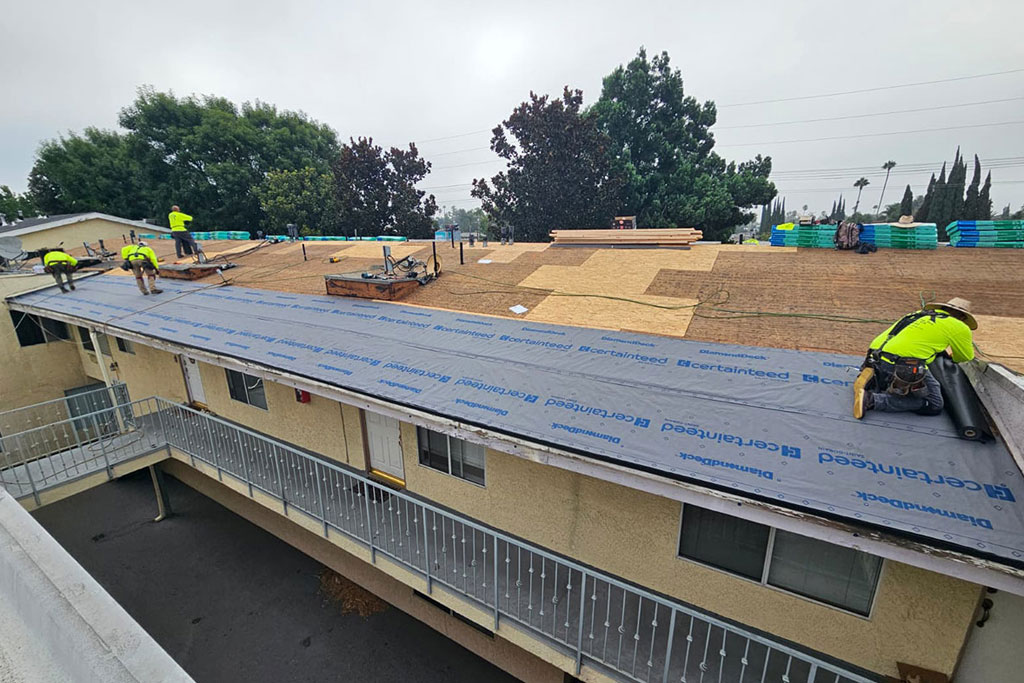
Los Angeles Housing Market 2025: From Frenzy to Balance—and What It Means for Multifamily Builders
After years of whiplash, the Los Angeles housing market is settling into a more deliberate rhythm. For owners, investors, and developers, that shift unlocks strategic opportunities—especially in multifamily and value‑add redevelopment.
Snapshot: A market finding its footing
- Prices: Countywide median is holding above $850,000, with premium neighborhoods (Santa Monica, Beverly Hills, Hollywood Hills, Manhattan Beach) still commanding multi‑million‑dollar values. Pasadena, Silver Lake, and Culver City remain fiercely competitive.
- Inventory: Still 30–40% below historical norms, which keeps a floor under prices even as the pace cools.
- Tempo: Typical days on market have normalized to 30–45 days (vs. the 2021–2022 frenzy), giving buyers more time to evaluate and negotiate.
- Cash buyers: Roughly 25–30% of transactions—below pandemic peaks but still a major force.
Select submarket benchmarks:
- Santa Monica: $2.5M–$4M+; Beverly Hills: $3M–$8M+
- Pasadena: $900K–$1.5M; Silver Lake: $1.2M–$2M
- Highland Park: $700K–$950K; Glendale: $650K–$900K
Momentum check: 2024 → 2025
After the rapid run‑up in 2020–2021 and the sharp pullback post‑May 2022, prices steadied in 2023 and have climbed gradually through 2024–2025. As of May 2025, low‑ and mid‑tier homes were roughly 7% higher year‑over‑year; high‑tier homes, about 5% higher.
Alternative market reads show a gentle rebound in August 2025 as mortgage rates eased and price points stabilized. The Los Angeles–Long Beach–Anaheim region’s average home value sits near $972,837 (about 1.1% year‑over‑year). In some segments, homes are going pending in roughly 20 days.
Forecast: Balanced doesn’t mean static
Consensus expectations point to a steady baseline with mixed model signals:
- Home values: Many forecasts call for +3–5% annual appreciation, supported by low supply and a resilient job market; some models anticipate a mild cooling, with values edging down about 1–2% over the next year.
- Inventory: May rise 10–15% as new construction delivers—still below long‑term norms but directionally helpful.
- Mortgage rates: Potential drift toward the 6.0–6.5% range by year‑end would incrementally improve affordability.
- Buyer behavior: Ongoing expansion of search areas, and heightened interest in energy‑efficient and smart‑home features.
No crash expected: With limited land, constrained new supply, and a diversified economy, any corrections are more likely to be modest (roughly 5–10%) than cyclical shocks.
Construction pulse: Where opportunity lives now
Despite a notable jump in multifamily starts in recent years, 2025 has been flat for both single‑family and multifamily groundbreakings. That pause—combined with persistent demand for rentals—creates space for thoughtful developers and asset owners to move.
Why this environment favors multifamily and value‑add
- Demand durability: LA’s strong rental fundamentals continue to support well‑located multifamily assets.
- Selectivity over speed: With days on market normalizing, quality design, construction clarity, and amenity relevance matter more than ever.
- Spec differentiation: Energy performance, electrification readiness, water conservation, and smart‑access systems are increasingly non‑negotiable.
- Capital planning: Fewer bidding wars and slightly longer timelines can improve acquisition and preconstruction diligence.
Practical guidance for owners and investors
- Scenario plan pricing: Underwrite both a modest appreciation case (+3–5%) and a mild softening case (~–1–2%). Balance rent growth assumptions with measured operating expense escalations.
- Design for efficiency: Target upgrades with measurable NOI lift: high‑SEER HVAC, heat‑pump water heaters, smart thermostats, LED + controls, low‑flow fixtures, and envelope enhancements where feasible.
- Amenity focus: Package lockers, bike storage, secure entry, EV‑ready parking, and durable shared spaces (roof decks, courtyards) tailored to submarket demographics.
- Construction timing: With starts flat, take advantage of improved trade availability and more predictable schedules. Lock long‑lead items early and align procurement to rate‑movement windows.
- Value‑add strategy: In emerging areas like Highland Park, Eagle Rock, and Glendale, light‑touch renovations paired with targeted MEP upgrades can reposition assets efficiently.
- Financing readiness: Typical down payments range from 3.5% (FHA) to 5–20% (conventional), with many buyers aiming for 20% to avoid PMI. Plan a 4–6 month search‑to‑close timeline, including 30–45 days in escrow.
How CAS Building Specialists can help
CAS partners with Los Angeles owners, investors, and developers to deliver modern, efficient, and resilient multifamily and commercial projects—new build and value‑add. Our approach emphasizes constructible design, cost clarity, and finish quality that stands out in a selective market.
- Preconstruction: feasibility, phasing, cost planning, and schedule modeling
- Multifamily delivery: podium, infill, mixed‑use, and adaptive reuse
- Occupied renovations: resident‑first sequencing and communication
- Sustainability: energy‑efficient scopes, electrification readiness, and water‑wise systems
If you’re evaluating a site, acquisition, or repositioning strategy in 2025, our team can help translate market dynamics into a build plan that pencils—and performs.

